Luck is a word that often comes up when we ask Jacky Ickx to take a look in the mirror of his life. For a Formula 1 driver of his generation, the sign of this luck is above all to be still alive at the dawn of fifty: providence was on his road when he needed it most, during more than thirty years of motor sports. Luck is to have gone through ineluctable hard blows, some terrifying accidents and painful wounds, both physical and moral: a journey that gives a humble and deep perspective on the true values of life, this good at once priceless and so precarious. Luck is also to continue today a happy and serene existence in a family environment animated by five beautiful children of spread ages. It’s all this that Jacky is aware of when he talks about luck. But she doesn’t explain everything. It is not she who has won eight F1 Grands Prix, six times the 24 Hours of Le Mans (an unmatched performance), two world titles in endurance and the record number of victories in sport-prototypes, the CanAm series and rally-raids like the Paris-Dakar, talking about achievements often strong than victories. So, what explains this particular panache and the eclecticism that surround Jacky Ickx’s career? Gifts and talent, this raw material that all champions inherit by birth, regardless of their sport, is also not sufficient. What distinguishes high-level athletes from each other is the way they use this talent, along with other qualities and defects that determine the personality of each of them. Some polish their gifts with hard work: if it had been the case for Jacky, his track record would have been even richer. But our man has a taste for effort, not for the laborious routine: “I could never have adapted to the current era and kept up the pace of dedicating all my time and all my thoughts to motor racing as required by modern Formula 1. Already, in the 70s, when we still did few private tests, Enzo Ferrari reproached me for my mixed interest in this fundamental work, which I quickly found tedious when it was prolonged. “You’ll be last all of your life!”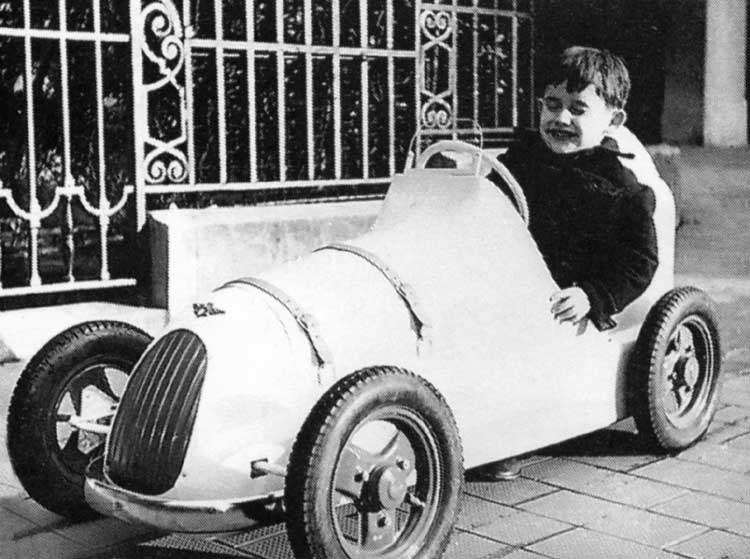
Family education played a prominent role in the direction of Jacky Ickx’s life. He explains that since his early childhood, his parents left him free to undertake difficult things alone, by informing him of the pitfalls he would have to overcome and explaining how to do it. So that I sometimes succeeded and, when I didn’t succeed, I immediately wanted to start over. In fact, my parents have always left me almost total freedom for things accessible to my reasoning. I was explained the pros and cons, and I was left to choose. The practice of sport and competition was an integral part of this educational system. This is how, after the scooter and the bike, Jacky Ickx naturally rides his first moped, then a 50 cm3 Zündapp that his father gave him as an introduction to trials.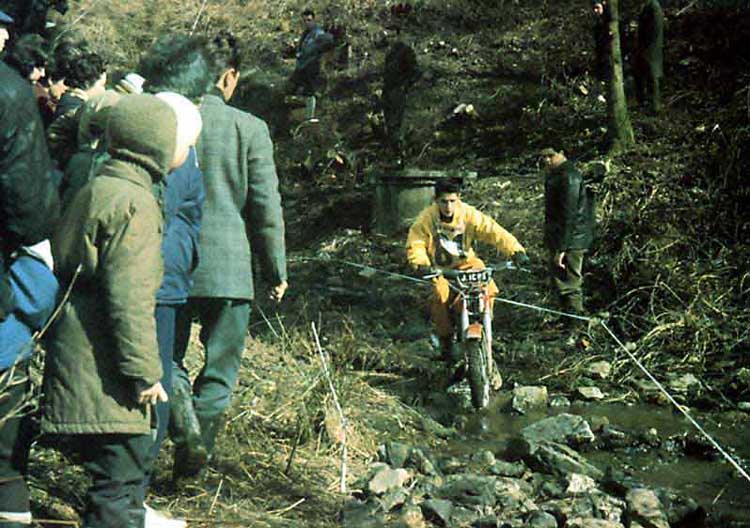
Very quickly, Jacky won several victories and, in 1962, a flat rear tire at the end of a course did not prevent him from successfully negotiating the last two non-stop. Noticed by this sign of determination, he is invited by Zündapp to compete in a race in Germany at the wheel of a factory machine, which leads to his first official pilot status.
Curious, Jacky is attracted to other experiences and, still in 50cc due to his young age, he feels for motocross and pure speed. At school, it’s less brilliant and one of his teachers, having come across the ranking of a race in which Jacky had been forced to withdraw, hurled at him in front of the whole class: “Last in class! Last in the race! You will be last all your life, Mr. Ickx! Trial championIf this mediocre schooling was the key contact of his career as a racing driver, Jacky is “still surprised, in hindsight, to have never wanted to learn anything at school, then at athenaeum, whereas the need to know more is rather a characteristic trait of my nature. But it was still favorable to me, because if I hadn’t been so lazy, and so wickedly humiliated by certain teachers, who certainly wanted my well-being in their own way, I wouldn’t have become a Grand Prix driver. At eighteen years old, Jacky Ickx is the Belgian Trial Champion, 50cc category, and he is old enough to start in a car. 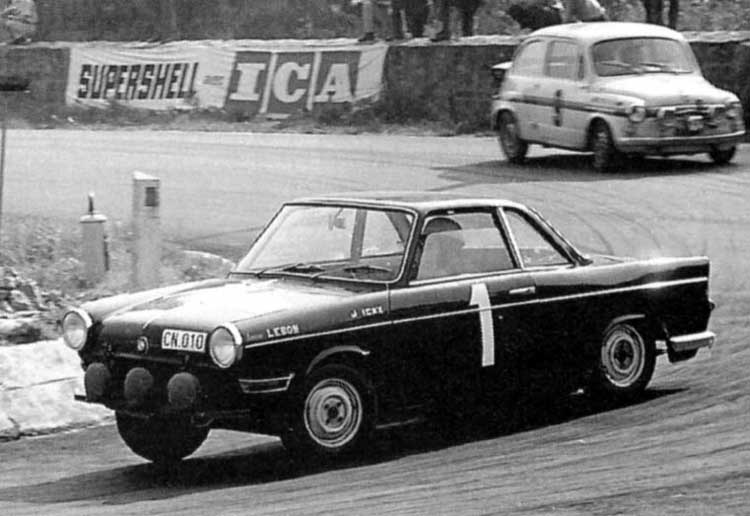 Behind the wheel of a small BMW 700S coupe (“perhaps the most remarkable racing car that has ever existed, a kind of Piper Cub from motorsport”), then of a Ford Cortina Lotus, this kid, son of a prominent automotive journalist, is as noticeable by its speed as by some sensational road exits. Behind the wheel of a small BMW 700S coupe (“perhaps the most remarkable racing car that has ever existed, a kind of Piper Cub from motorsport”), then of a Ford Cortina Lotus, this kid, son of a prominent automotive journalist, is as noticeable by its speed as by some sensational road exits.
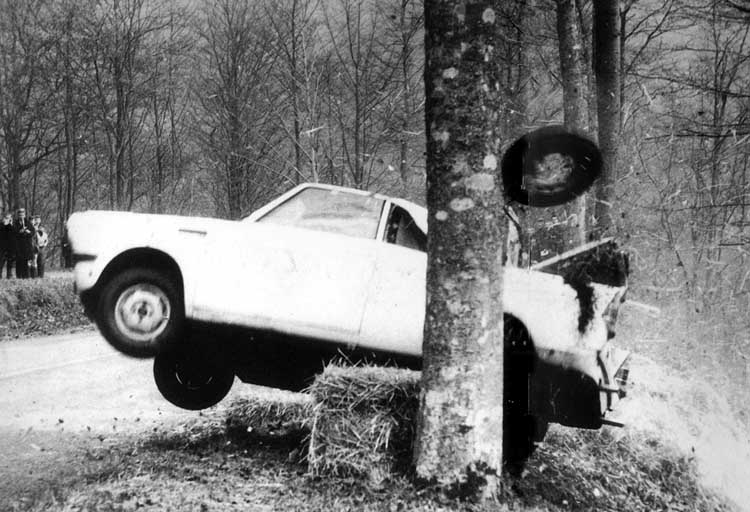
That of the 1964 Spa Cups brutally confronts young Jacky with hostile adversity and the terrible reality of a high-risk sport. On the first lap, hindered by a faster Alfa that has just passed him, he leaves the road in the S of Masta, a gully between houses that goes full throttle down the fastest circuit in the world.! e shock is terrible, the Cortina-Lotus flies away and lands on its roof in a small meadow overlooking the road. The place is forbidden, but spectators had settled there. One of them is killed. In the confusion, the body of the unfortunate victim is loaded into the ambulance that brings the young pilot, unhurt but very shocked, to the circuit infirmary… This hard blow, and the backlash it caused, could have been fatal to Jacky Ickx’s career. Fortunately, Ford Belgium is putting him back in the saddle. His obvious talent, and the freshness of his youth shaking established values, earned him the valuable help of several people, whose importance he did not forget in his orbit.
But Jacky has already understood that if he wants to reach the top of a pyramid that doesn’t reserve space for everyone, it’s up to him to force his luck. What he does not fail to do at the wheel of the CortinaLotus, which counts its specialists like Jim Clark or John Whitmore. Ken Tyrrell, already known for his talent detection flair, offers him a trial, which then leads to a contract to race in Formula 3 at the end of his military service. Jacky Ickx did not linger in F3, a category populated by young wolves ready for any madness, but forced passage to the F2 which, at this point, allowed to compete against most of the Grand Prix drivers. Very quickly, Ken Tyrrell discerns in Jacky the maturity necessary to start him in F2, as a team member of Jackie Stewart. 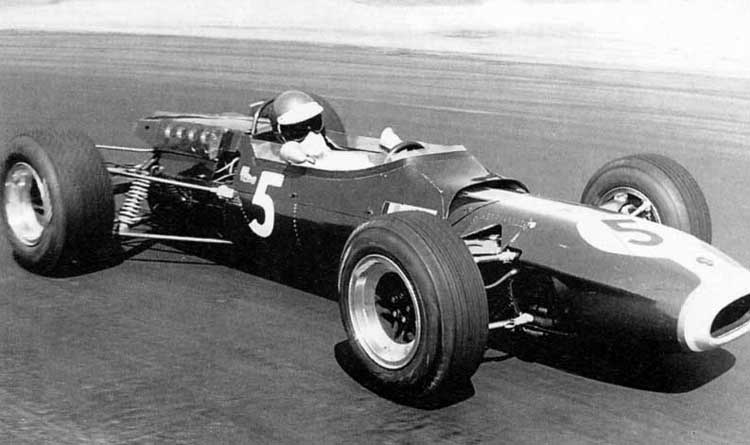 In the meantime, Jacky Ickx has already been crowned Belgian Tourism Champion; he won the 24 Hours of Francorchamps driving a BMW 2000TI with Hubert Hahne, one year after his older brother Pascal, and he participated in his first 24 Hours of Le Mans driving a Ford GT40, with Jochen Neepash. In the meantime, Jacky Ickx has already been crowned Belgian Tourism Champion; he won the 24 Hours of Francorchamps driving a BMW 2000TI with Hubert Hahne, one year after his older brother Pascal, and he participated in his first 24 Hours of Le Mans driving a Ford GT40, with Jochen Neepash.
The 1967 season, the one that would propel Jacky lckx to Formula 1, is memorable with a few stunts. Among the ingredients of an exceptional career, we have already mentioned the role of luck, that of talent, intelligence and family education. What also distinguishes Jacky Ickx from many other leading pilots is this ability to hit a big shot at the right time; and also, very often, when conditions are the most difficult. In numerous occasions, he seemed to sign these exploits more because it amused him, to surpass itself himself and to reach so the objective as had settled, that because it is needed. We guess that he removes then a roguish pleasure of the surprise which he provoked. 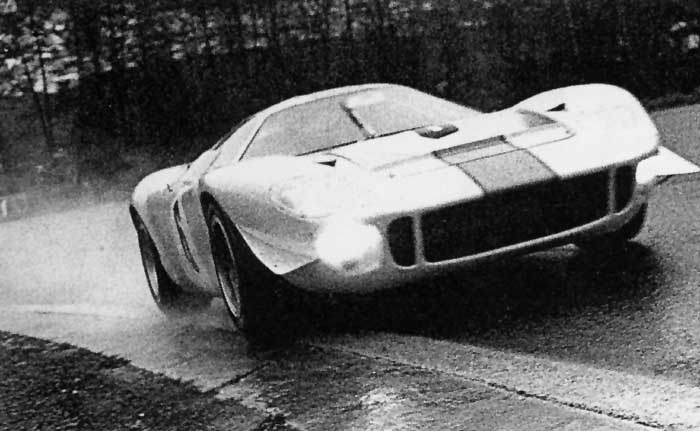 At the beginning of May, it is pouring down on Francorchamps for the Thousand Kilometers of Spa: conditions that no one is happy about on such a selective and fast circuit, therefore dangerous. Jacky here is still a beginner in sport-prototype against the world’s best drivers in the specialty: Willy Mairesse, Ludovico Scarfiotti, Mike Parkes, Phil Hill and others. From the start, he attacked at the head of the Eau Rouge bridge with his Mirage-Ford, an evolved GT 40, in front of the superb Ferrari P4 and the American Chaparral (strangely topped with a vast fin that was going to become a school). Despite a slower teammate, the American Dick Thompson, Jacky conquered his first major international victory in sport-prototype, this genre of which he was to become the undisputed master. At the beginning of May, it is pouring down on Francorchamps for the Thousand Kilometers of Spa: conditions that no one is happy about on such a selective and fast circuit, therefore dangerous. Jacky here is still a beginner in sport-prototype against the world’s best drivers in the specialty: Willy Mairesse, Ludovico Scarfiotti, Mike Parkes, Phil Hill and others. From the start, he attacked at the head of the Eau Rouge bridge with his Mirage-Ford, an evolved GT 40, in front of the superb Ferrari P4 and the American Chaparral (strangely topped with a vast fin that was going to become a school). Despite a slower teammate, the American Dick Thompson, Jacky conquered his first major international victory in sport-prototype, this genre of which he was to become the undisputed master.
The long flight of the F2But his entry ticket through the big door in Formula 1, it is on the Nürburgring circuit that Jacky Ickx appropriates it, at the beginning of August. As the Formula 1 cars are not very numerous to animate this German Grand Prix on the famous Nordschleife, this track long of twenty-two kilometers, the organizers have decided to also admit Formula 2 cars. Significantly less powerful with their 1,600 cm3 engines compared to 3-liter F1 they must form a second starting grid, behind that reserved for F1. Ken Tyrrell hired Jacky Ickx with the Matra Cosworth. 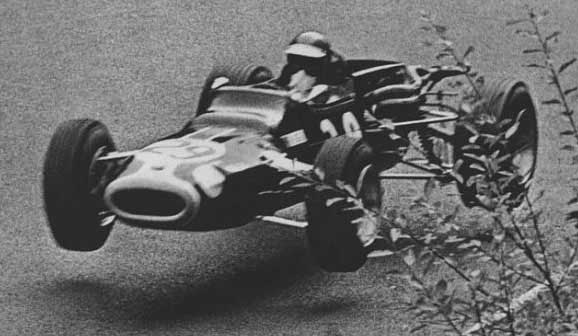 Jean Graton tells us: “During the qualifying session on Saturday, I had accompanied my photographer friend Michel Delombaerde to the other end of the track, in the climb towards the Karrusel, at a place called Kesselchen. On this circuit, which has more than one hundred and fifty turns, cars took off about seventeen times per lap due to the rugged terrain in the wooded massif of the Eifel. Michel had chosen this place because that it was spectacular and photogenic. We were the only ones to see the cars passing, about every eight minutes during a quick lap. But it was worth the wait. The trail where we were posted in the undergrowth overlooked the circuit and it gave us a bird’s eye view of the cars taking off with the rope from this fast bend on the left. They were flying across the width of the runway to make contact with the ground on the right, on the other side, not far from the grass and bushes for the most adventurous. The place was all the more impressive and interesting as one could listen to the pilots more or less turn off the gas before entering this curve, whose exit they did not see. I still hear the thud of the tires as they fell back on the asphalt and the suspensions crashed onto their stops. Sometimes the chassis would stick on their heels while spitting out some wreaths of sparks. Michel had an eye fixed in his lenses, attentive to triggering the shutter at the right moment. Me, I could observe the pilots and I still see the expression of shock on Denny Hulme’s face, while he had given himself a fright. Jean Graton tells us: “During the qualifying session on Saturday, I had accompanied my photographer friend Michel Delombaerde to the other end of the track, in the climb towards the Karrusel, at a place called Kesselchen. On this circuit, which has more than one hundred and fifty turns, cars took off about seventeen times per lap due to the rugged terrain in the wooded massif of the Eifel. Michel had chosen this place because that it was spectacular and photogenic. We were the only ones to see the cars passing, about every eight minutes during a quick lap. But it was worth the wait. The trail where we were posted in the undergrowth overlooked the circuit and it gave us a bird’s eye view of the cars taking off with the rope from this fast bend on the left. They were flying across the width of the runway to make contact with the ground on the right, on the other side, not far from the grass and bushes for the most adventurous. The place was all the more impressive and interesting as one could listen to the pilots more or less turn off the gas before entering this curve, whose exit they did not see. I still hear the thud of the tires as they fell back on the asphalt and the suspensions crashed onto their stops. Sometimes the chassis would stick on their heels while spitting out some wreaths of sparks. Michel had an eye fixed in his lenses, attentive to triggering the shutter at the right moment. Me, I could observe the pilots and I still see the expression of shock on Denny Hulme’s face, while he had given himself a fright.
And then, there was this passage – only one at this speed – of Jacky Ickx’s Matra F2. We didn’t hear him lift his foot and the frail single-seater emerged, leaping so much higher than everyone else. Her flight seemed endless, as if it was going to be ruined in the forest on the other side. It finally landed at the extreme limit of the runway, its rear right wheel biting even a little on the grass while raising a cloud of dust. In the way that Jacky Ickx went full throttle again, without a hint of hesitation, to disappear towards the curve next, we understood that he had felt no fear. It was cold determination; this willingness to accept the risks of a total and calculated effort without the slightest margin for error, to sign a time that would create a sensation. Michel Delombaerde and I looked at each other, amazed and fascinated by what we had just seen. At the place where we were, we could not hear the information broadcast by the speakers. But the speed of this passage was so obvious that, back in the paddock, we were only half surprised to learn the scope of the exploit we had witnessed first hand: at the wheel of his Matra F2, Jacky Ickx had set the third absolute time in the German Grand Prix trials, behind Jim Clark and Denny Hulme, but in front of all the other F1!
The next day, although he left behind the F1 as required by the regulations, and not on this first line that he had conquered with his chronometric performance, Ickx accomplished a masterful comeback: he was fourth when the break of a ball joint on the right front suspension forced him to abandon. 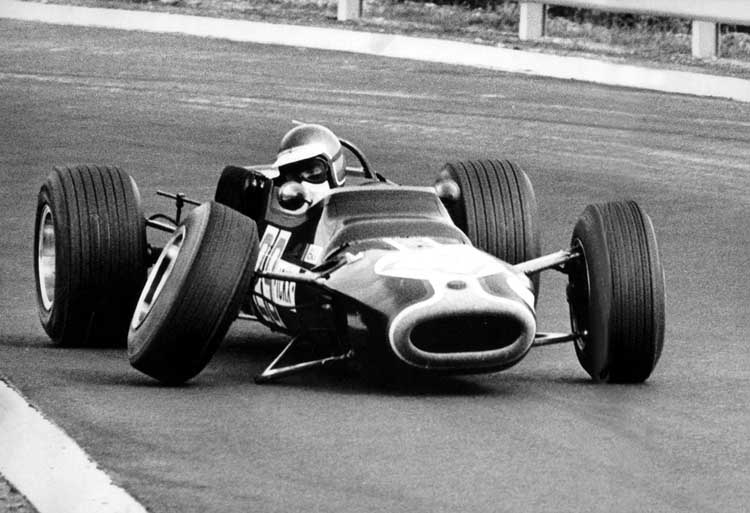 But it was of no great importance: shortly after, at twenty-two years old, he was hired by Ferrari for the 1968 Grand Prix season. Jacky acknowledges that the definitive trigger for his entry into Formula 1 occurred during this weekend at the Nürburgring, and probably on this magical lap in testing. At the time, it was necessary to take classes in the different categories that established a hierarchy based on merit: only those who had obtained a distinction». The way in which he shone on this August day at the Nürburgring, he explains by his perfect knowledge of the circuit, acquired notably by participating in the Marathon de la Route (a eighty-four-hour event with several drivers) and by the qualities of the Matra F2 chassis, whose agility and lightness were an asset compared to F1 on such a track. It does not prevent the delay of the other F2 present in this German Grand Prix was in the order of… thirty seconds around the lap compared to the performance of the young Belgian driver! At the end of the season, Jacky Ickx was also crowned European F2 Champion because of all his results. A few months later, I was no longer the isolated witness of another of these legendary feats of arms of which Jacky Ickx was the author: all the public of Spa-Francorchamps lived this extraordinary moment with the same emotion. But it was of no great importance: shortly after, at twenty-two years old, he was hired by Ferrari for the 1968 Grand Prix season. Jacky acknowledges that the definitive trigger for his entry into Formula 1 occurred during this weekend at the Nürburgring, and probably on this magical lap in testing. At the time, it was necessary to take classes in the different categories that established a hierarchy based on merit: only those who had obtained a distinction». The way in which he shone on this August day at the Nürburgring, he explains by his perfect knowledge of the circuit, acquired notably by participating in the Marathon de la Route (a eighty-four-hour event with several drivers) and by the qualities of the Matra F2 chassis, whose agility and lightness were an asset compared to F1 on such a track. It does not prevent the delay of the other F2 present in this German Grand Prix was in the order of… thirty seconds around the lap compared to the performance of the young Belgian driver! At the end of the season, Jacky Ickx was also crowned European F2 Champion because of all his results. A few months later, I was no longer the isolated witness of another of these legendary feats of arms of which Jacky Ickx was the author: all the public of Spa-Francorchamps lived this extraordinary moment with the same emotion.
At the end of May ’68, a month that remained historic for other reasons, the weather is even more foul than the previous year at the start of the Spa Thousand Kilometers. And Jacky Ickx does us the same thing as the Mirage-Ford: in the pouring rain, he settles down at the command of the pack that climbs the Raidillon, drowned in immense showers of water lifted by the generously sculpted wide tires. Then silence falls over Francorchamps, disturbed only by the hubbub of the spectators after the excitement of the start and by the countless raindrops that crash onto the roof of the 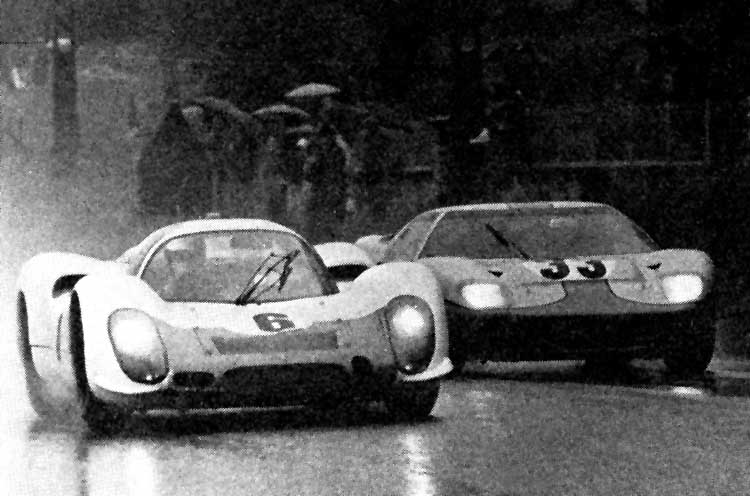 tribunes. A few minutes later, the ears tend to listen to the tumult that one hears being reborn on the side of Blanchimont and we see rising the water trail of a car at the exit of the Club House: someone managed to take a little advantage in this first lap. We hear him downshift all his gears at the braking of the Source pin, before seeing the car appear as he accelerates again at the exit of this slow turn: it is Jacky Ickx’s Mirage-Ford that takes the lead. Alone. tribunes. A few minutes later, the ears tend to listen to the tumult that one hears being reborn on the side of Blanchimont and we see rising the water trail of a car at the exit of the Club House: someone managed to take a little advantage in this first lap. We hear him downshift all his gears at the braking of the Source pin, before seeing the car appear as he accelerates again at the exit of this slow turn: it is Jacky Ickx’s Mirage-Ford that takes the lead. Alone. She rushes in front of the stands at the edge of the aquaplane in the water runoff and, following her with a glance strung the Raidillon, one begins to wonder: but where are the others? The clamor of the Ford V8 is already fading into the distance. The seconds that follow seem endless. It’s not possible, something must have happened. An accident that blocked the path for all the competitors? One thinks all the more naturally of this possibility since the memory of the start of the Belgian Grand Prix in 1966 is still vivid in memories, when the competitors, surprised by a storm that had burst at the other end of the circuit, were off the road in large numbers. It is then that the rest of the pack finally appears, as clustered as they usually are at the end of a first lap: challenging the puddles with rare skill mixed with this insolent audacity, Jacky Ickx simply managed to gain an advance of thirty-eight seconds on pursuers who are already no longer! Never has the start of a race demonstrated such superiority. As at the Nürburgring in F2, the nature of the fourteen ultra-fast kilometers of Francorchamps were ideally suited to this kind of exploit, especially because they were drowned by this rain which was frightening and which even more assimilated the piloting to a perilous balancing exercise. As for the Nürburgring, Jacky Ickx gives an explanation to justify this feat: he modestly tempers its scope, whereas it was mainly due to the skill and audacity he was determined to show under these hellish conditions : “Before taking the start of the Thousand Kilometers, I had won the side event of the Spa Cups at the wheel of a Ford Falcon, which allowed me to acclimatize to the atmospheric circumstances of the day and to identify where were the most dangerous puddles of water.” Another coup d’éclat will definitively establish the reputation of excellence of Jacky Ickx in the rain. Six weeks later, at the beginning of July, on a soggy circuit in Rouen, he dominated the French Grand Prix with authority behind the wheel of his Ferrari. It is the first victory of a Belgian driver in a World Championship Grand Prix. Alas, Jacky has no heart in celebration: injured at the start of the event, Jo Schlesser perished in his burning Honda. 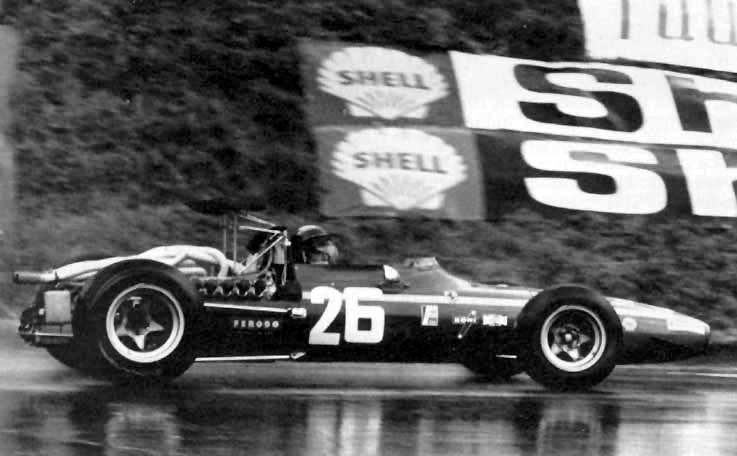
Throttle blockedHis season ends prematurely in Canada, while he is 2nd in the World Championship standings: throttle blocked completely, he violently leaves the road and he is extracted from the wreck of his Ferrari with a fractured tibia and fibula. Jacky explains to us how this accident happened. “To improve the engine’s performance, the profile of the intake ducts had been modified. Following this, I noticed that the gas opening guillotine tended to jam. It was during the tests and the accelerator had got stuck a first time, but I had been able to keep control of the car with a big scare and, back at the stand, Giulo Borsari, my chief mechanic, had checked everything, without detecting anything abnormal. It happened a second time and I stopped again to report it and to have the mechanism checked. The third time, following my request, Borsari confessed in a book twenty years after he had pretended to check, because he found nothing abnormal. I left again, the accelerator jammed again and, at the place where it happened, the accident was this time inevitable. It was the worst moment of this brave Borsari’s career!” 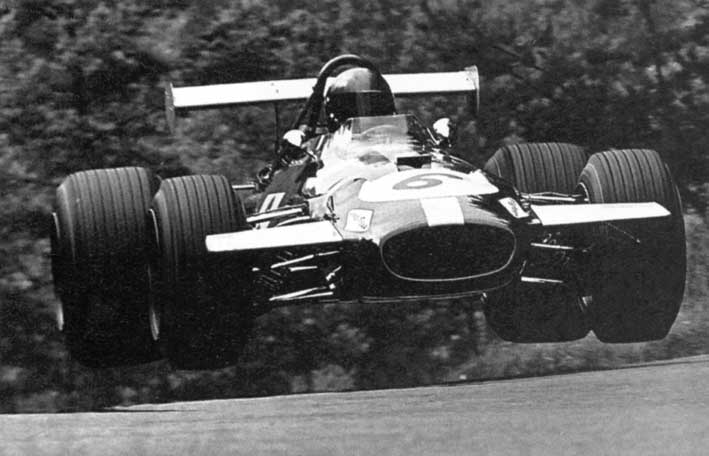 For the 1969 season, Ickx moved to Brabham. But very quickly, he realizes that he is condemned to evolve in the shadow of ‘Black Jack’, the boss. When Brabham breaks an ankle, the situation of the Belgian driver improves. At the Nurburgring, he defeats Jackie Stewart after a superb duel and wins one of his most important victories: if he can beat Stewart, deemed the best in the world, he is definitely convinced that he can become a world champion. For the 1969 season, Ickx moved to Brabham. But very quickly, he realizes that he is condemned to evolve in the shadow of ‘Black Jack’, the boss. When Brabham breaks an ankle, the situation of the Belgian driver improves. At the Nurburgring, he defeats Jackie Stewart after a superb duel and wins one of his most important victories: if he can beat Stewart, deemed the best in the world, he is definitely convinced that he can become a world champion.
The 24 hours of Le Mans 1969Porsche had won the World Sports Car Championship before John Wyer tore up the May page of his 1969 calendar. The 24 hours of Le Mans was always a unique race, a world championship in itself. Jaguar, Aston-Martin and Ford understood it with true clarity and had raced accordingly. The world title of Sports Car without Le Mans was a half empty record, not half full.
Porsche had registered two 917 for Vic Elford/Richard Attwood and for Kurt Ahrens/Rolf Stommelen. A third private 917 was hired by John Woolfe and piloted by himself and Herbert Linge, pilot on loan from the Stuttgard factory. Behind the 917 there were four 908 Group 6, two 910 of 2 liters and seven 911 GT. Two private Alfa T33s were taking over from Autodelta which, following the death of Lucien Bianchi during pre-qualifying at the wheel of the T33, decided to abandon the event. Matra, after an encouraging start in 1968, comes with four 630-650 V12 3.0-liters. Ferrari has hired a 312P Group 6.
Jacky Ickx is associated with Jack Olivier at the wheel of the GT40, already victorious in 1968, by John Wyer wearing the Gulf colours. A second GT40 was entrusted to the crew David Hobbs/Mike Hailwood. John Wyer was absent, his wife being sick, and replaced by David Yorke. Despite the news cs Ford chicane, Stommelen had improved the lap record held by Denny Hulme with the 7.0-liter MkIV Ford and placed his 917 first in line.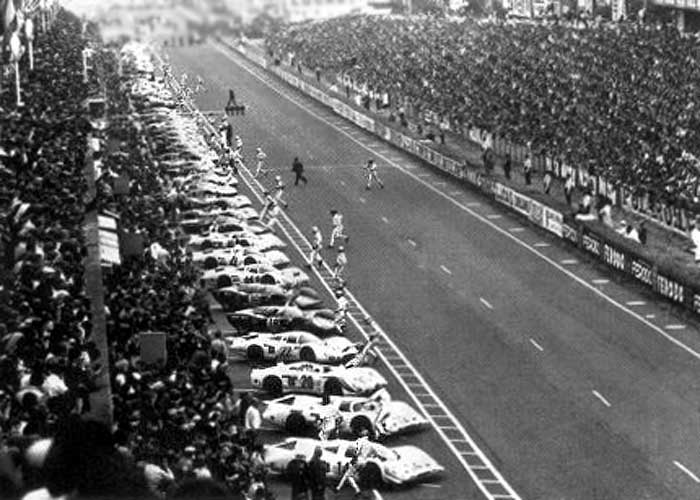 At 2 p.m., the French flag is lowered and the pilots cross the track running, get into their car and start with a bang. All except Jacky Ickx, who carelessly walks up to the GT40 and carefully fastens his safety harness like an adult and then starts. It is a calm protest, but more than a quarter of a million spectators have been sensitized. Stommelen, with the howling of his 917, was taking a pack of five white Porsches. In the White House, it was always Stommelen who was leading when suddenly a column of smoke rose. John Woolfe, who had not taken the time to fasten his harness, left the road and hit the safety rail. The flaming tank of the Porsche was projected onto the track, setting fire to the unlucky Chris Amon’s Ferrari which was arriving at that moment. The curtain of flames and smoke that blocks the track blocks the race. Amon manages to clear himself but Woolfe, he has left his life behind. Was he tempting, like much in this first round, to fasten one’s harness? We will never have an answer to that question.
But already the race is getting back to its rhythm. Stommelen, on the 6th lap, breaks the record for the lap at an average speed of 240 km/h. No one has yet driven so fast in Le Mans. At 3 PM, the 917 and the Matra refueled and the 908 of Siffert/Redman took command. For a long time because it must stop and finally give up around 8 PM: the gearbox has passed away. It is the 917 of Elford/Attwood that is at the top. At 8 PM, only the Porsches captivate the audience. Everyone has forgotten the GT40 of the young Belgian protester. The 908 of Herrmann-Larrousse climbed from 6th place to 4th place while in the lead Elford is followed by the 908 of Schutz-Mitter and Lins-Kaushen. At 7 turns behind them, is the Matra of Beltoise-Courage, itself followed by … the two GT40 of John Wyer.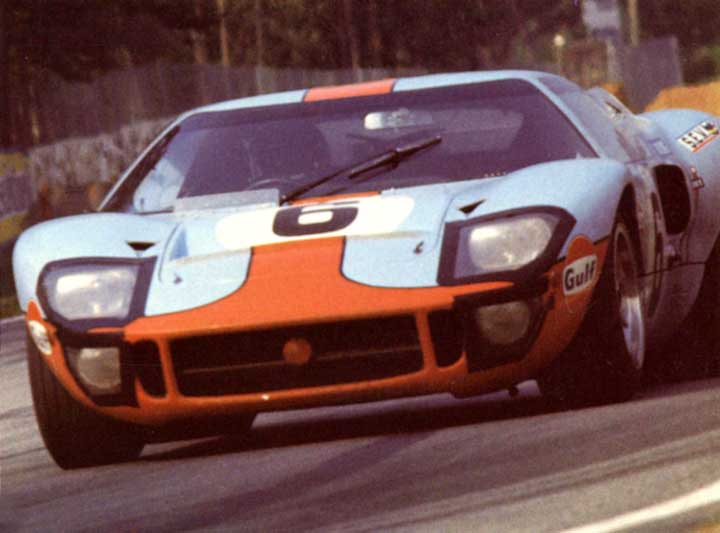
Around 11 PM the fog fell again, you have to ease up. And at 2 o’clock in the morning, Jacky crossed the Matra de Beltoise. The fog thickens and at 4 o’clock, in the Hunaudières, the 908 de Schutz leaves the track, hits the safety rail and catches fire. Fortunately, the pilot is compensated. At 6 o’clock, the 917 of Stommelen abandons due to a gearbox failure. At dawn, there are only 16 cars left on the track out of the 45 at the start. At 10 o’clock, it’s the Porsche from Lins that gives up: gearbox.
At exactly 11 o’clock, Jacky takes command in front of Herrmann’s 908 which follows in the same round. Yorke brings in Jacky 10 minutes later for a scheduled stop and Herrmann moves to the lead for a lap before stopping and passing the baton to Larrousse. Again, Jacky is in the lead followed by Larrousse at 10 seconds. The next hour happens with Ickx aligning the towers in 3:40, driving in a conservative but fast way, saving the car and the fuel, working to delay the final mechanical stop. He knows that the assault will come soon. At noon the status quo is maintained. With the fuel hatch open, Larousse attacks, tries to mislead Ickx and force him to an early stop. Ford is the first to refuel and the 908 takes command. Two turns later, Larousse gives up the wheel to Herrmann. The stop is too long and Ickx is again in the lead. Herrmann consumed a few gallons of fuel and let the tires slowly warm up. He settles less than 200 meters behind the blue Ford and makes a visual inventory. The GT40 seems hopelessly healthy. Ickx is in his second consecutive stint, but his conduct is precise. Yorke had chosen wisely. Further away and out of sight Hailwood is third in the other GT40, but four laps behind the leader with the Matra de Beltoise on his heels. 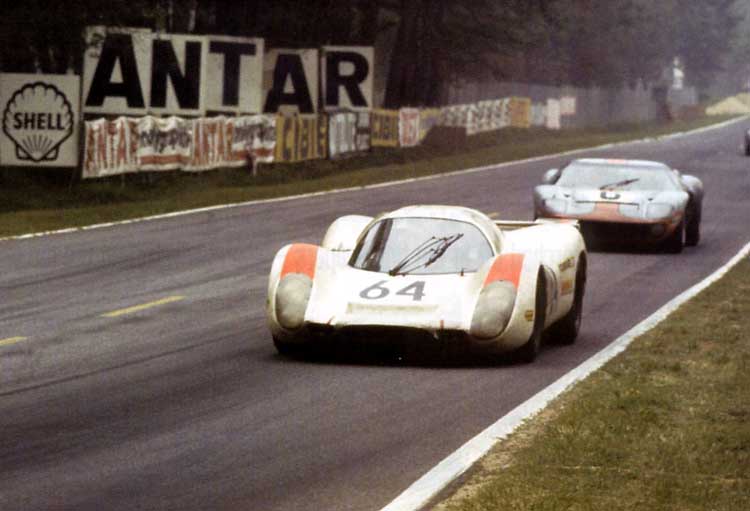 With less than an hour to go, Herrmann was finally ready. He drops Ickx and takes command. A lap later, Ickx is again in the lead, only now Herrmann valiantly tries to overtake Hailwood’s GT40 then 3rd. It takes one more lap for Hans to manage to overtake Mike The Bike who was having too much fun to let the German pass and pass. A turn later, he doubles up and annoys Herrmann again while Ickx runs away. It will take several turns for Herrmann to rid of Hailwood, who had apparently decided that he had put enough distance between him and the Matra and stopped the fight. With less than an hour to go, Herrmann was finally ready. He drops Ickx and takes command. A lap later, Ickx is again in the lead, only now Herrmann valiantly tries to overtake Hailwood’s GT40 then 3rd. It takes one more lap for Hans to manage to overtake Mike The Bike who was having too much fun to let the German pass and pass. A turn later, he doubles up and annoys Herrmann again while Ickx runs away. It will take several turns for Herrmann to rid of Hailwood, who had apparently decided that he had put enough distance between him and the Matra and stopped the fight.
Once free, the 908 uses its higher speed in the Hunaudières to approach, engage and pass Ickx, who promptly returns the same thanks to a delayed braking, clean and decisive at the chicane. The 5-liter Ford takes the lead in front of the pits. Herrmann starts again at Mulsanne, but this time Ickx does not attack at the Ford turn. He is waiting for a turn. And Herrmann plays his trump again at Mulsanne. But in Arnage, Ickx passes him and will keep the command until the checkered flag. 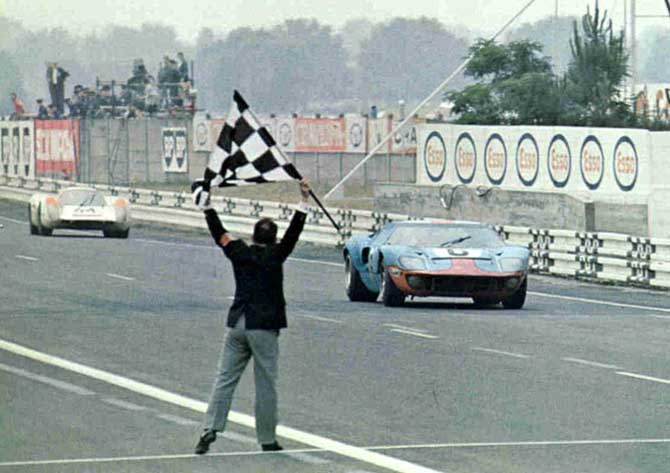 It’s the closest final in history of Le Mans, 120 meters separating the GT 40 by Jacky and the Porsche 908 by Herrmann. Jacky had just won Le Mans for the first time. It’s the closest final in history of Le Mans, 120 meters separating the GT 40 by Jacky and the Porsche 908 by Herrmann. Jacky had just won Le Mans for the first time.
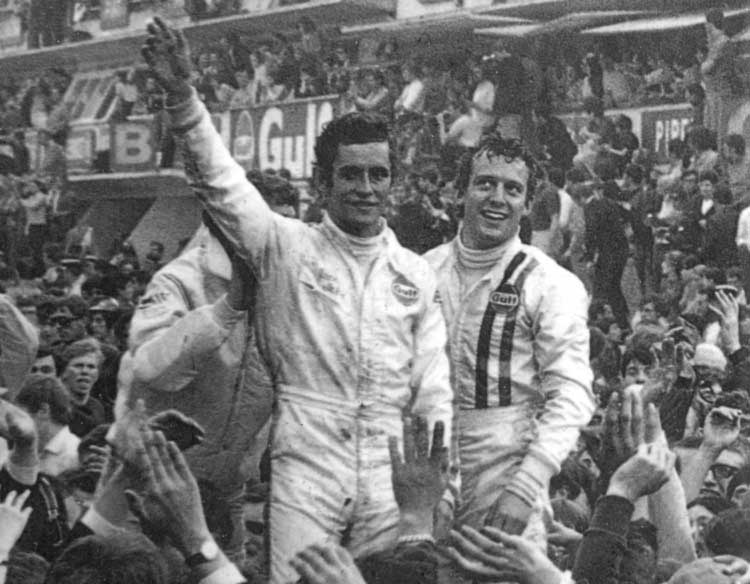 On Monday morning Jacky Ickx drove a Porsche 911 Targa, belonging to the distributor Porsche Belgium, to Paris for the victory banquet. Near Chartres a car was hitting the Porsche. The Targa was crashing against a post, but Ickx, the man who had defied tradition and walked towards his GT40, securing his harness before the most spectacular victory of the 24 hours of Le Mans in history, unbuckled his safety belt and came out unscathed from the destroyed Porsche. On Monday morning Jacky Ickx drove a Porsche 911 Targa, belonging to the distributor Porsche Belgium, to Paris for the victory banquet. Near Chartres a car was hitting the Porsche. The Targa was crashing against a post, but Ickx, the man who had defied tradition and walked towards his GT40, securing his harness before the most spectacular victory of the 24 hours of Le Mans in history, unbuckled his safety belt and came out unscathed from the destroyed Porsche.
The state of graceIn 1970, he had to leave Brabham and decided to return to Ferrari, which was preparing the new 312B with its flat twelve cylinders. He becomes the leader of the prestigious Scuderia Ferrari which, at that time, also participates in major sports-prototype events.
Ickx also runs in F2, for BMW. 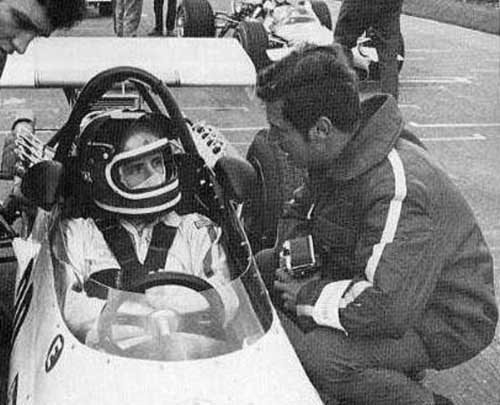
“Contrary to what is happening today, the drivers practiced all disciplines: F1, F2, tourism, proto… we had to be good at everything and we ran almost every weekend, much more for the taste of competition than for mercantile spirit. We earned only relatively little money compared to what modern F1 has become.”
Le Mans, this event in which the qualities of Jacky Ickx were going to be wonderfully expressed, was not always tender with him.
In 1970, he was thus at the start with an official Ferrari 512S, associated with the excellent Swiss Peter Schetty. The 5-liter Ferrari is not as efficient as its rival, the Porsche 917. Ickx and Schetty opt for a regular race. The rain begins to fall at the beginning of the evening.
In the middle of the night, shortly before the halfway point, their Ferrari found itself second, that is to say advantageously placed behind Siffert-Redman, the “hares” of Porsche. Victim of a wheel lock while braking the Ford baffle, Ickx spins around and hits in reverse the sand bank intended to hold the car. But hardened by the rain, it acts as a springboard and by falling back to the other side, the Ferrari crushes a track inspector. Unscathed, Jacky is once again confronted with the drama of this unfathomable fatality. With the Ferrari 312 PB, the lightweight sport-proto derived from the 3-litre 12-cylinder flat engine F1, Ickx has achieved numerous successes and is hardened to the particular requirements of endurance races, which are won by adopting the right strategy. 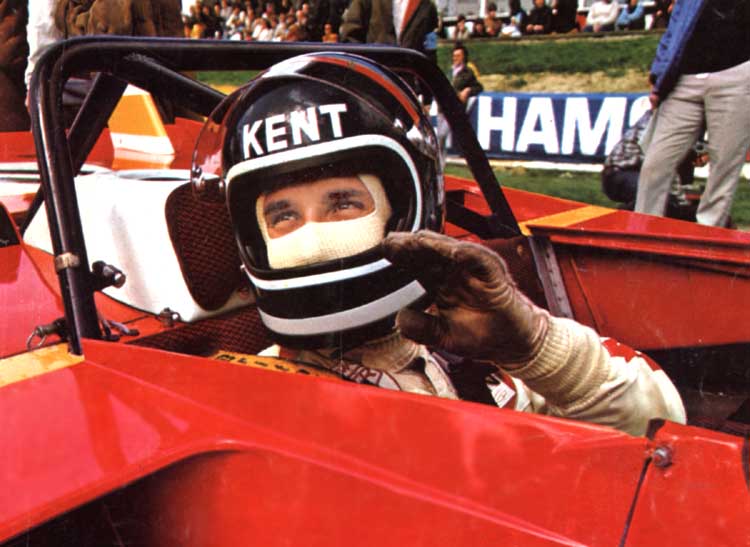 In 1975, at Le Mans, it is necessary to take consumption into account. Ickx and Bell win with the Mirage-Ford entered by John Wyer. The following year, for Jacky, it was the first Mancelle victory with Porsche, where he would soon feel good and deliver all the fruits of his maturity and experience. In 1975, at Le Mans, it is necessary to take consumption into account. Ickx and Bell win with the Mirage-Ford entered by John Wyer. The following year, for Jacky, it was the first Mancelle victory with Porsche, where he would soon feel good and deliver all the fruits of his maturity and experience.
“I can’t believe it”Then comes the one from 1977, the most beautiful of all.
“I started at the wheel of the Porsche 936 number 3, which I shared with Henri Pescarolo. But we had to give up very quickly, engine broken. The second Porsche 936, number 4, had also experienced an incident: the mechanics were able to remedy it, but when it left, in the forty-ninth position and with several laps behind, any chance of a good ranking seemed lost, especially against the Renaults’ armada. Needless to say that the morale of the Porsche team was at its lowest. 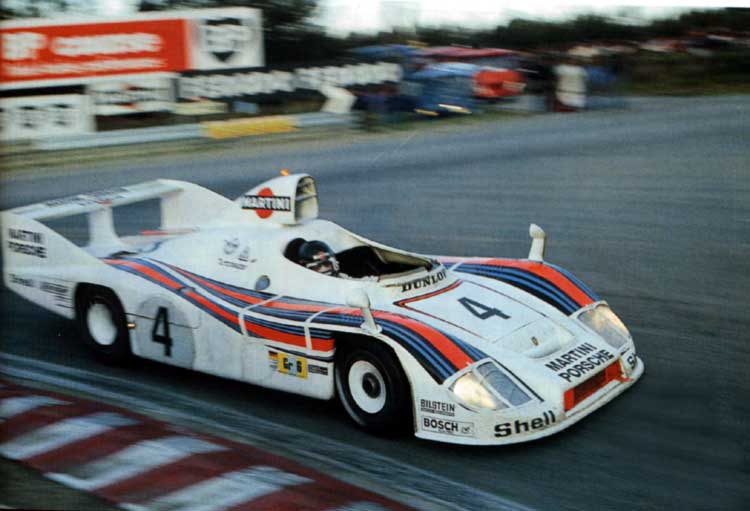 They then made me go up to the 4, with Barth and Haywood. It rained all night and I drove almost all the time, at the limit of what the regulation allowed. I gave myself completely and flew in a state of divine grace: this night was truly magical for me. The team, which was psychologically destroyed, also started to believe in it again, as we climbed up the rankings. Finally everyone gave their best. They then made me go up to the 4, with Barth and Haywood. It rained all night and I drove almost all the time, at the limit of what the regulation allowed. I gave myself completely and flew in a state of divine grace: this night was truly magical for me. The team, which was psychologically destroyed, also started to believe in it again, as we climbed up the rankings. Finally everyone gave their best.
When I pointed out to him that I was still at the wheel during a refueling, my German engineer shook his head, completely dumbfounded, saying “I can’t believe it…” (I cannot believe it). At daybreak, I was exhausted. We had climbed back to the second position, exerting tremendous pressure on Jabouille and Bell’s Renault, which soon broke. We ourselves just finished, with a moribund engine, which was only running on five cylinders. Like the car, I couldn’t have given anything more, but it was a fantastic moment “.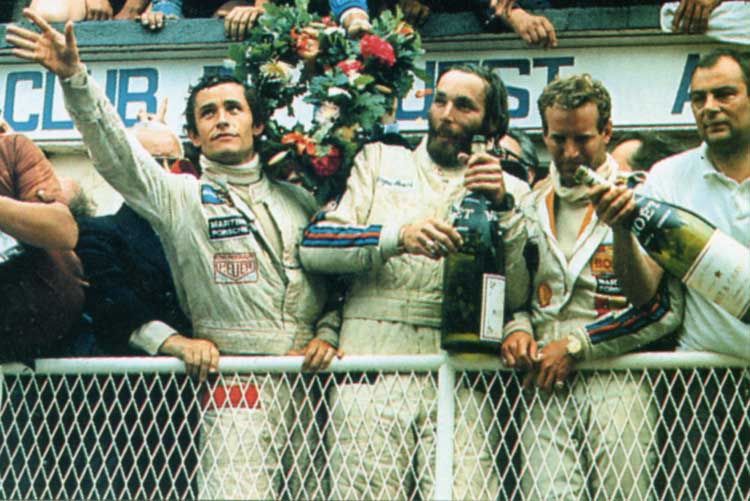 In fact, Jacky Ickx, who was considered lazy at school, likes effort and difficulty. It even seems that this is what has captivated him for so long in motorsport, more than racing itself. A twenty-four-hour event, like Le Mans, is particularly hard: he excelled there In fact, Jacky Ickx, who was considered lazy at school, likes effort and difficulty. It even seems that this is what has captivated him for so long in motorsport, more than racing itself. A twenty-four-hour event, like Le Mans, is particularly hard: he excelled there
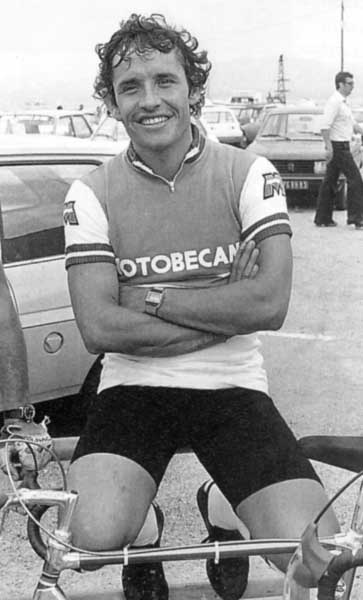 For pleasure, he has practiced cycling a lot, often riding with a group of very trained friends, among whom Eddy Merckx, and regularly hiking in the alpine passes and the wildest regions. The rally-raids allowed him to go even further in physical performance, until he finally chose to compete alone in the Paris-Dakar, performing himself the maintenance or repair of his Toyota at the end of the stages and thus further reducing his time of sleep. For pleasure, he has practiced cycling a lot, often riding with a group of very trained friends, among whom Eddy Merckx, and regularly hiking in the alpine passes and the wildest regions. The rally-raids allowed him to go even further in physical performance, until he finally chose to compete alone in the Paris-Dakar, performing himself the maintenance or repair of his Toyota at the end of the stages and thus further reducing his time of sleep.
The tightrope walkerHere is another example of the charismatic influence of Jacky Ickx. At the end of 1974, he agreed to lend his support to a charity evening, which was organized at the velodrome in Rocourt, near Liège. Elegantly dressed in a jacket and tie, the Belgian Formula 1 driver crosses the width of the stadium by walking on a wire stretched 5 meters from the ground, without a net or any protection. The previous year, for this work, I had played football with other athletes from diverse backgrounds. But football is not really my thing. So I decided to make my contribution in a different way and it came to me the idea of this tightrope walker act. I went to buy cable and I stretched it on gallows, which I had installed 2 meters above the ground in my garden. I put on suitable shoes, I got a swing and I trained for 15 days. It’s not that difficult.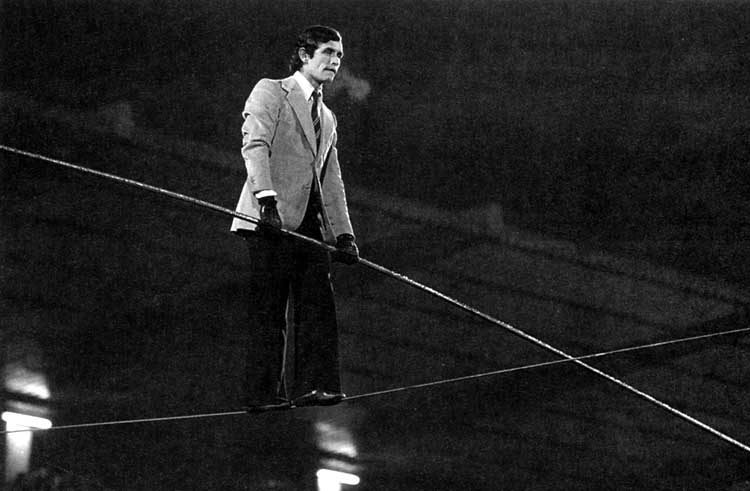 But let’s take this step back to return to Formula 1.
The 1970 season is already well underway when the Ferrari 312 B begins to win, ironically Ickx and Regazzoni sign the double in Austria, homeland of Jochen Rindt, who flies towards the world title at the wheel of the fine Lotus 72. When Rindt kills himself in Monza, a few weeks later, three Grands Prix still have to be raced: by winning the Canadian one, Jacky Ickx is the last one to still be able to reach a total of points higher than that of the unfortunate Austrian driver and thus beat him in the race for the world title. But an abandonment due to a fuel line failure will decide otherwise during the USA Grand Prix, which leaves no regrets for an athlete like Jacky, still a winner in Mexico: Rindt is crowned posthumously world champion.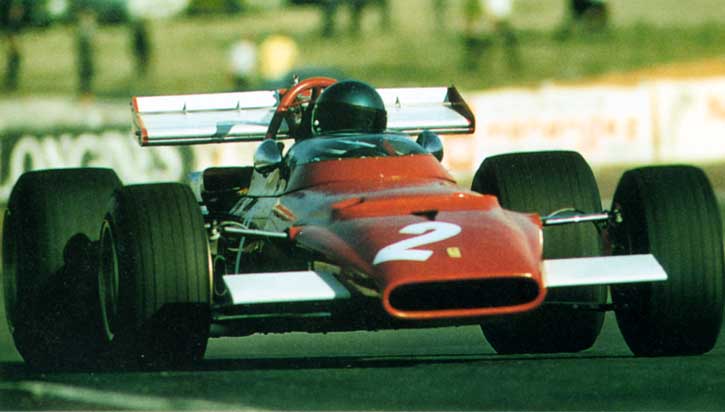 The exploit of Paddock BendIn 1971 and 1972, Ferrari failed to achieve its ambitions for the entire season. Ickx wins another 2 Grands Prix, including the last one at the Nürburgring, his favorite circuit. In 1973, nothing goes at Ferrari and halfway through the season, it’s divorce. Jacky moves to other stables, including some of the leading ones, like Lotus in 1974 and 1975, but he is not there at the right time.
In early 1974 at Brands Hatch, during the Race of Champions, he does the exterior to Niki Lauda’s Ferrari in the rain in Paddock Bend, a delicate plunging turn. The maneuver seems crazy with audacity, but Jacky knows what he is doing, thus surprising Lauda and winning the victory. “I was one of the first drivers to notice that, in the rain, the outer edge of the track often offers better grip, where cars do not pass often. I had attempted a first passing maneuver on Lauda at this point, but I arrived too short and had to give up at the last moment. Fortunately, absorbed by his own steering, Lauda hadn’t noticed, which allowed me to still benefit from the surprise effect on my second attempt, which was the right one.”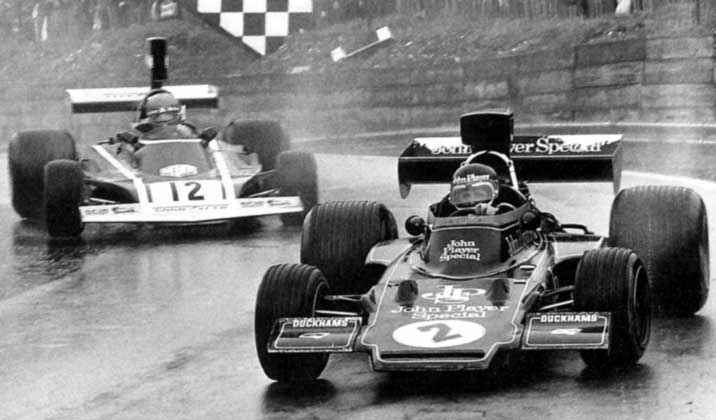 Despite this coup, Jacky Ickx senses that he will be Despite this coup, Jacky Ickx senses that he will be
difficult to bounce back in one of the best stables at the moment in F1: “You hold on to convictions; you believe that, by a miracle, you will recover. You agree to drive less good cars and you are inevitably more exposed. That’s what finally happened to me at Ensign. Jacky recounts his terrible accident at the 1976 USA Grand Prix, to Watkins Glen: “The Ensign team of Mo Nunn was meritorious, but lacked adequate means. On this circuit, we didn’t have the proper suspension springs, so with a full tank of gas, the steering of the Ensign became so hard that I couldn’t change course anymore. What happened was that in a turn, I didn’t have the strength necessary to make a course correction in time. The Ensign hits the rails full force and it is cut in two by a stake; the gas tank is gutted and the car catches fire. Jacky escapes from it and boxes towards the edge of the track, with a bare foot. One of my racing booties got stuck in the pedalboard and its seams, which were nevertheless extraordinarily strong, have literally exploded”. Foot injuries are terrible: several fractures of each ankle, a severed toe, most of the ligaments torn and third-degree burns. Despite this, Jacky recovers like a high-level athlete: three months later, he is recovered.
In 1979, he will inherit a Ligier for some Grands Prix, replacing Patrick Depailler, who had an accident while hang gliding. During this interim, Ickx will realize that he no longer has sufficient motivation to drive in F1.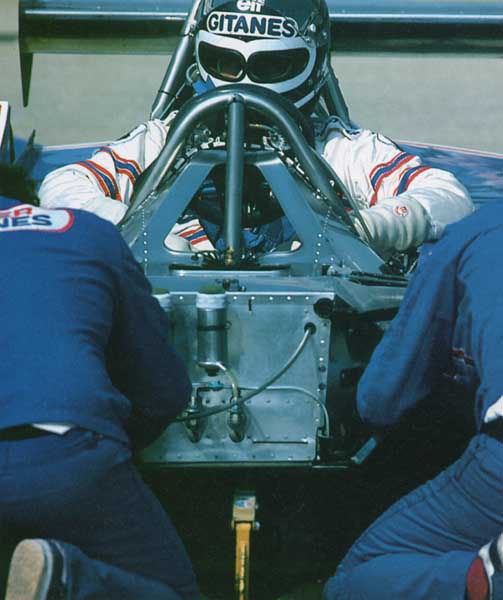 The greatest horror“Except at the very beginning, when I discovered my personal limits, I barely got off the road. Some seasons, if I did only one spin, it was a lot. On the other hand, fate made that, unlike others who regularly broke cars, my accidents often had a dramatic character. And several times, fire, which is the most terrible of all dangers, was present”. How can we not remember the episode of Jarama in 1970 and this first dramatic confrontation between Jacky Ickx and the terror of flames? 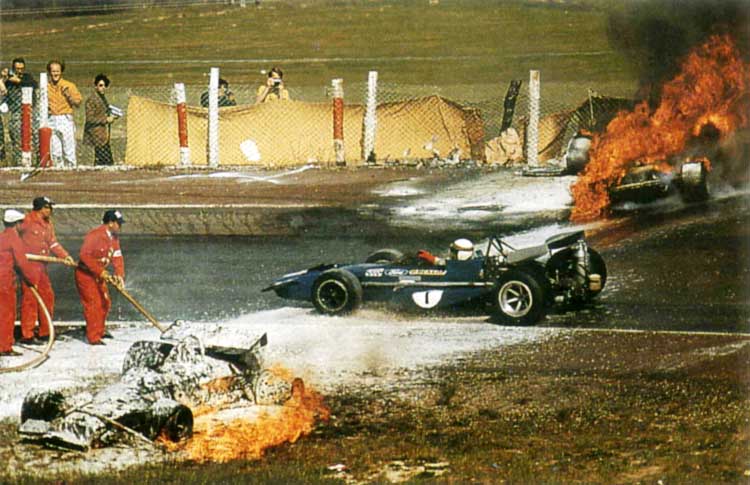
|
 Since the end of the second world war, the Western world has had the enormous privilege of living in peace in relative prosperity, which allowed man to accomplish all kinds of exploits for reasons other than his sole survival. Is it because Jacky Ickx was born on the first day of this year 1945 that a good fairy bent over his cradle?