
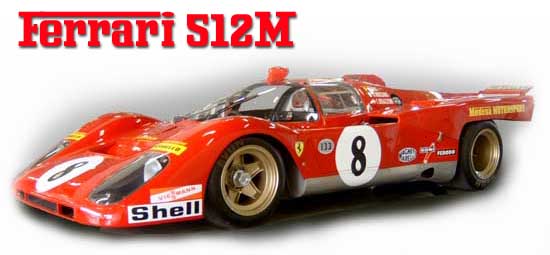
At the end of 1969, Enzo Ferrari presented the first of his sports cars: the 512S, 5 liters: a new challenge to fight against the last born in Porsche, the 917.
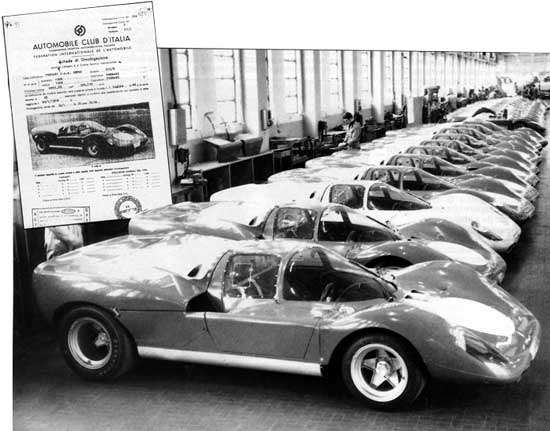
In its attempt to produce a sports car as competitive as possible, Ferrari jumped from one class to another after the changes of regulations in 1968 by the board of directors of motorsport. The prototypes were limited to a capacity of three liters and a new class GT of limited production with an engine of five liters maximum was created. To be approved for class GT, at least 50 copies had to be produced, but by 1969 the number was reduced to 25. With the three-liter V12 Formula 1 engine available, Ferrari’s choice to produce a prototype was entirely understandable.
The new 312P was ready for the opening of the 1969 season at Daytona, where it won pole position and finished first in its class. Although the 312P proved its worth from its launch, it was abandoned after Porsche debuted the 917 at Le Mans in June of that year. Fast in testing, the 917 had shown that they still lacked development. However, the 917 had convinced Ferrari to build a new GT.
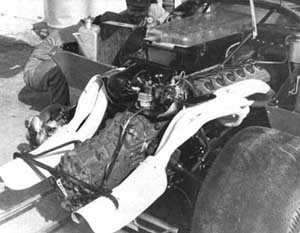 Unlike Porsche, whose initial engine of the 917 was 4.5 liters, Ferrari decided to exploit the regulation to the maximum by starting with a brand new 5-liter engine in mid-1969. With four valves per cylinder, quadruple camshaft and a Lucas fuel injection system, the new Type 261 engine closely followed the design of Formula 1 engines. For reliability reasons, the engine was not as sharp as those of F1, but with 550 hp available, it wasn’t bad. Subsequent modifications were made on this engine which at the end of its career developed more than 600 hp.
The chassis were composed of an aluminum shell for the front section and a tubular frame to support the engine and the rear suspension. 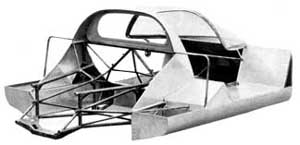 It was essentially a development of the 312P chassis, with modifications made to support the larger engine and comply with the GT class. The requirements for GT class included a different spare wheel and windshield. The rounded fiberglass body of the 312 was replaced. At its start, the set weighed 880 kg, which was considerably more than that of its rival in Stuttgart.
Bad weather was present during the testings of the new 512S until the end of the winter, the team rarely finding a dry track. The tests were more important than ever, because the six-month development gap with Porsche had to be reduced before the 24 hours of Daytona, the opening race of the season, in January 1970. When Mario Andretti drove for the first time on a dry track during the Daytona test week, he was timed with a time of less than one second that of the Porsche. The speed was clearly there, only one problem arose: the hologation of the car. At the deadline, Ferrari had 17 completed examples and the parts of the remaining 8 cars still needed to be assembled.
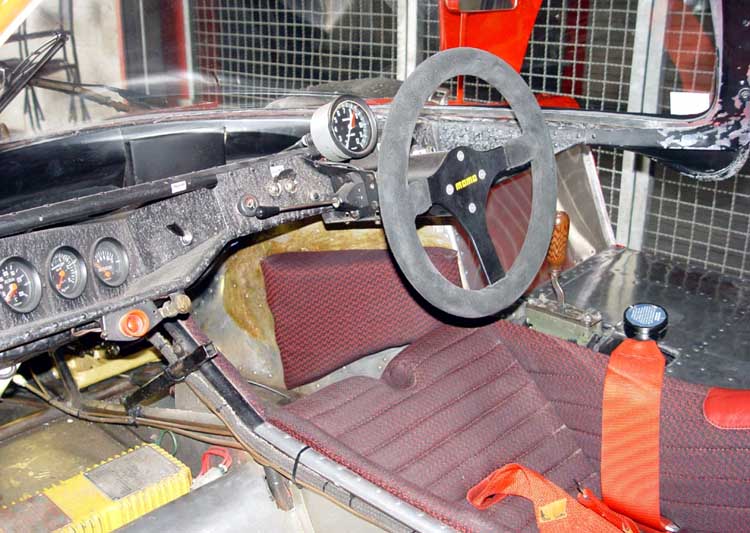 Five hours after homologation, five cars were on their way to Daytona. During the qualification one-on-one, the 512S and 917 faced unfavorable weather conditions. Andretti took advantage of the situation and placed his 512 S in pole position for its debut, just as the 312P had done the previous year. The five Ferrari entered were victims of problems during the race and alone, Andretti’s car finished the event, at a reasonable fifth place. A suspension problem had deprived him of an apparently assured second place.
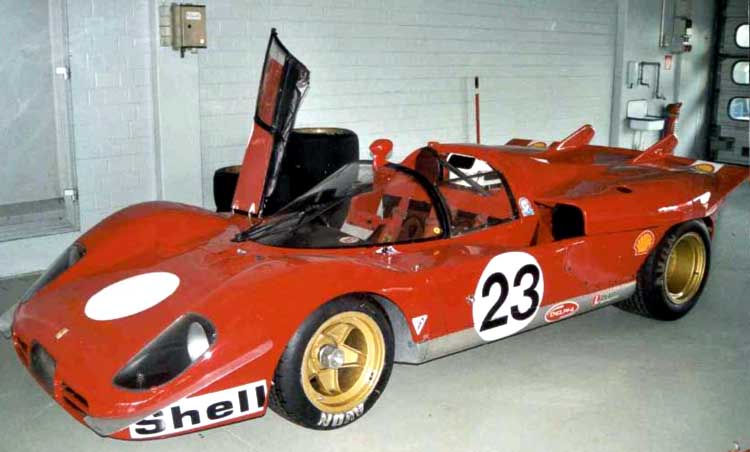 Ferrari probably learned more of the 512 during these 24 Hours in Daytona than it had done during the two months of testing preceding the event. The Ferrari lacked power and weighed too much. Improving aerodynamics and fuel consumption were also on Forghieri’s “to do” list. An open spyder version brought a gain of 25 kg, but hardly appreciated by many pilots, especially in rainy conditions. Small lips were added on each side of the nose to increase the bearing force. The improved fuel injection gave the V12 the same power as the Porsche.
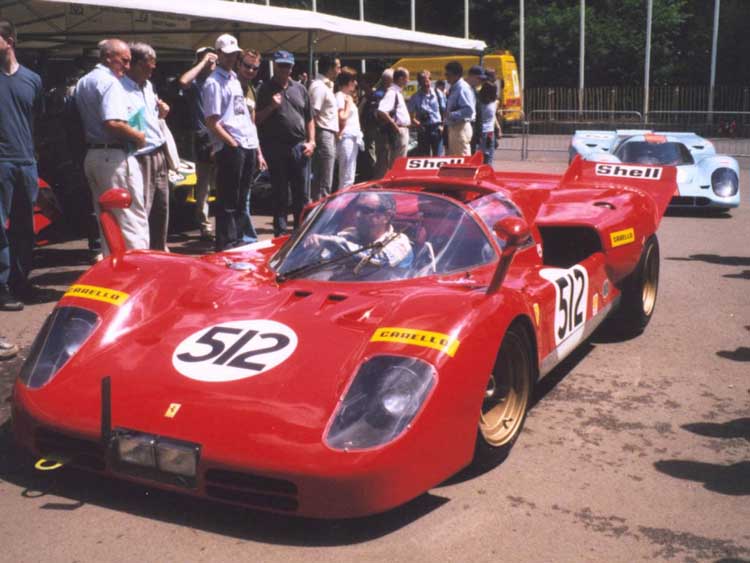 Four revised 512S were pitted against the four 917 for the next championship race at Sebring. Three of the four Ferrari had spyder bodywork and the car that had finished the Daytona race was still in its initial configuration. Showing his talent again, Andretti qualified his 512S on pole, followed by the seven other GT cars. From the start of the race, Andretti was in the lead, only being caught by three Porsche during a pit stop. It was only temporary because the three Porsche were quickly overtaken by problems, leaving the four Ferrari to lead the race. Andretti presented himself first under the chequered flag, securing the first victory by a 512 S.
The championship then arrived in Europe for five other races before the pinnacle of the season, the 24 Hours of Le Mans. Forghieri wanted to develop the car more, but was limited due to homologation restrictions. The reliability was incredible during these five races, with just one abandon out of 17 starts. Unfortunately, none of the finishes leads to a victory, but there were podiums nevertheless including a 2-3-4 finish behind only one 917 at the 1000 kms of Monza. Not to mention the third place of the 512 at the Targa Florio, a track that favored agile 3-liter prototypes.
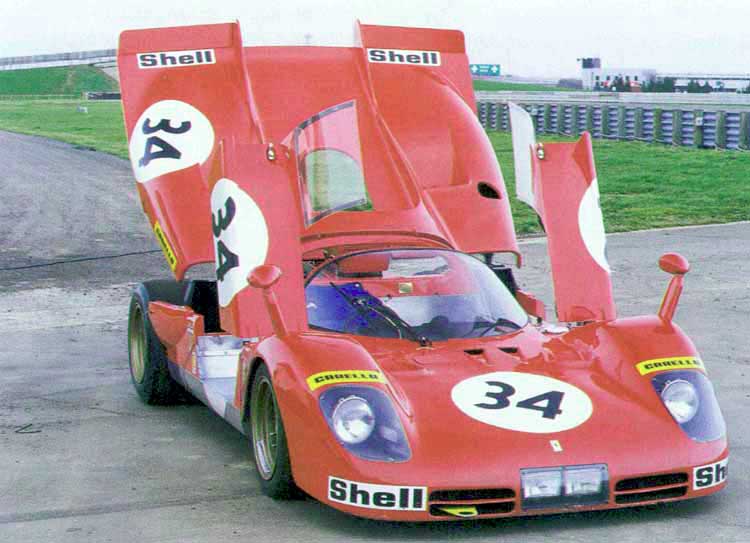 Le Mans was the most important race of the season for Porsche. A victory at Le Mans would end a laborious effort of 20 years. More than on any other circuit, the maximum speed of the car at Le Mans is crucial. Both Ferrari and Porsche produced special long tail versions that had less downforce favoring maximum speed in the Hunaudières. Ferrari entered four long-tailed factory cars, but the main Porsche team, JWA (Gulf), was reluctant to enter long-tailed cars following accidents during testing. Again, the Ferrari were considerably heavier than the 917, both in the long tail version and the classic one.
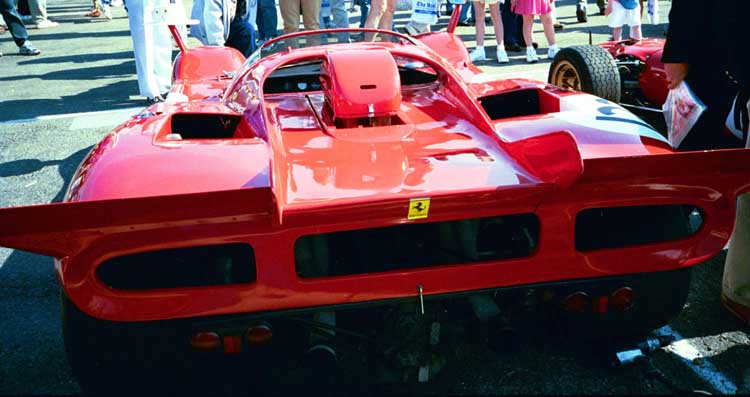 The qualifiers showed however that the additional 100 kilos of the 512 S were not an insurmountable handicap because Vacarella achieved a time of just 0.3s behind the poleman Elford and his 917 with long tail. Finishing had been the highlight of Ferrari during the European season, but suddenly it was no longer the case at Le Mans, Vacarella’s car leaving the race… just 30 minutes after its beginning !!! When, shortly after the start of the race, the rain began to make the circuit slippery, two of the factory cars were victims of multiple misfortunes. Jacky Ickx had taken the initiative in the remaining 512 S of factory, but around 2:00 in the morning he hit a butte and while falling down the car killed a track inspector. Porsche finally won Le Mans.
Now, with the pressure of Le Mans behind them, Forghieri, at the head of the development team, began working on a more powerful and lower version of the 512 S. The 512M (M for Modificato or Modified), produced 620 hp and weighed only 815 kg, compared to the 856 kg of the 512S Spyder. A ‘sharper’ wedge-shaped nose was fitted and a large air box was mounted above the engine to force air into the inlet trumpets.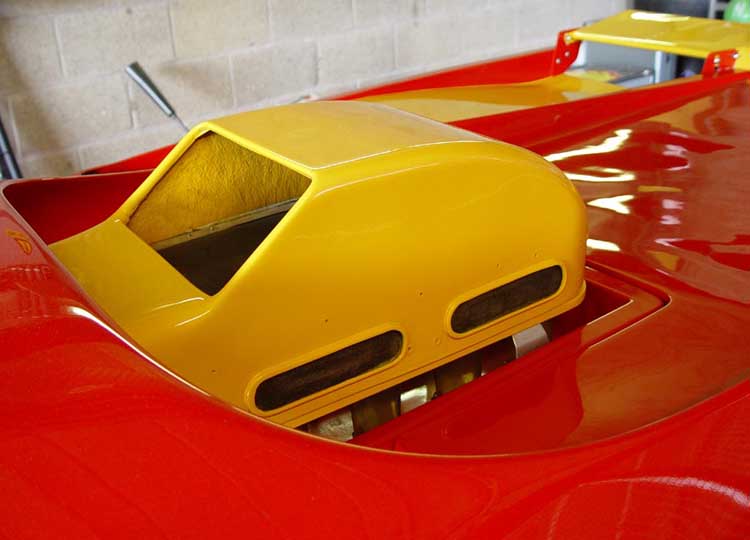 Other modifications including a new rear body were made. The spyder option was no longer available. The ‘Package M’ was far from cheap, but around 15 of the 25 copies of the 512 S were updated.
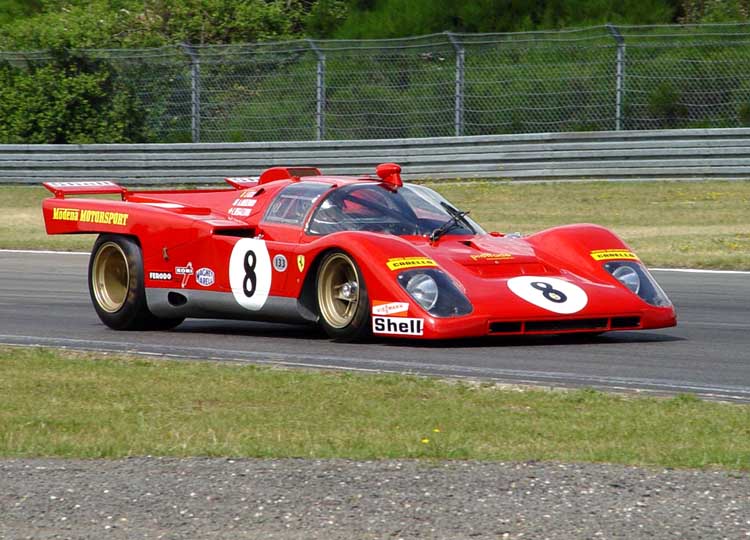 The prototype 512M made its debut at the final race of the 1970 championship in Austria. During the qualifiers, the car driven by Ickx-Giunti was a victim of fuel supply problems, but achieved times similar to most 917. With full tanks and fuel supply issues resolved, Ickx was beating the pole time of the 917 during the first laps of the race. He continued to improve the lap record to finally beat his own lap record in Formula 1, achieved two months earlier. For the first time this season, the Porsche were upgraded by a real margin. Unfortunately, alternator problems ended the race of Ickx/Giunti, but they had clearly proven that the gap in development of the Ferrari was finally over.
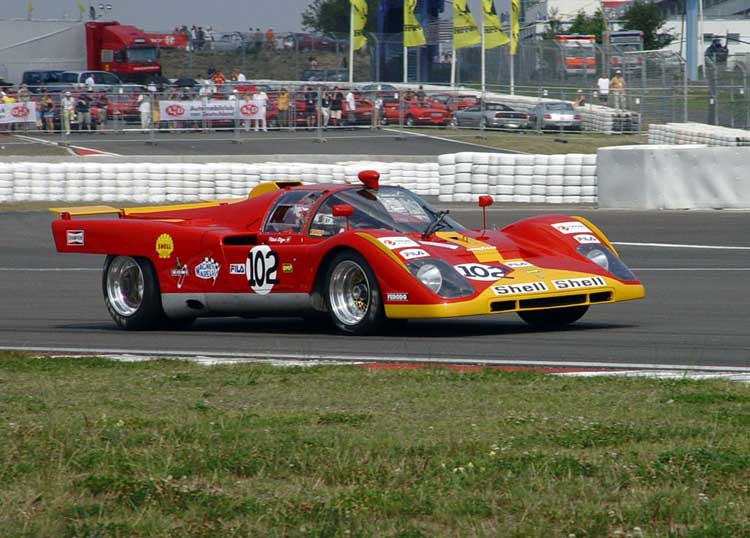 Ickx and Giunti took the 512M to Kyalami for a race of 1,000 kms outside the championship. The only other factory car was the Porsche 917K, driven by the newly crowned world champion Siffert and supported by Ahrens. The domination of the 512 M was incredible; easily on pole compared to the best Porsche car. A one-minute penalty imposed because of a false start did not discourage the crew and after 1,000 kms, Ickx and Giunti crossed the finish line, two laps ahead of the Porsche.
For the Scuderia, things seemed very encouraging for the 1971 season. But Enzo Ferrari had some very different plans for this season and decided to focus again on a 3-liter prototype program. With most rounds of the world championship favoring smaller prototypes, Ferrari feared increased competition from Matra and Alfa Romeo. Thus the factory team focused on the new 312P(B) prototypes by leaving the use of the 512M to the customer’s teams. None of these were able to compete with the preparation of the Porsche and the 512M never proved to be a real force in 1971.
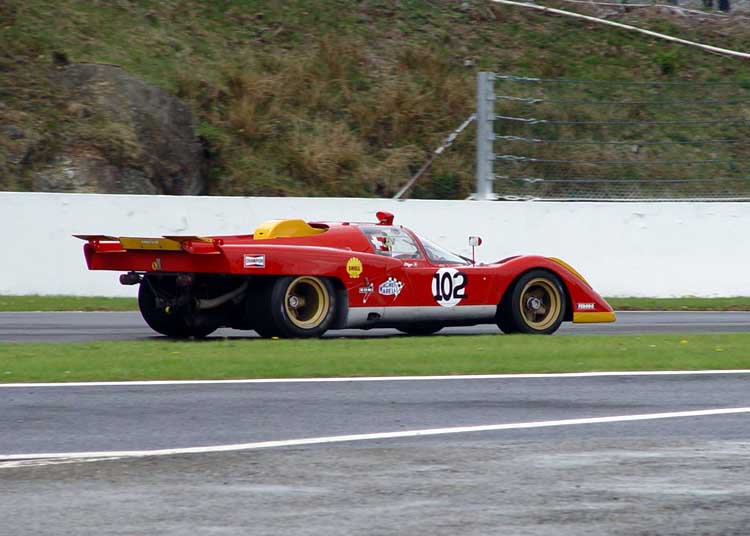 When the 5-litre class was abandoned for 1972, the career of both the 512 and 917 was over. The two cars are forever associated as can be seen and in conversations when one is rarely mentioned without the other…
By winning the world championship in 1972, Ferrari proved that its choice to focus on the 312 PB in 1971 was not in vain.
TECHNICAl DATA
Engine
Mid, longitudinally mounted
Type 261C 60º V12
Valvetrain : 4 valves/cylinder, DOHC
Displacement : 4.993 liters / 182.5 cm³
Fuel feed : Injection Lucas
Power : 610 bhp / 455.1 kW at 9000 rpm
Drive : Rear wheel drive with 5 Speed Manual
Weight : 815 kg
Numbers built: 25